I though Sita Sings the Blues (now available for streaming or download) was quite good. I have a deep love for mythology, so here, in order of appearance, the gods in Sita Sings the Blues.
Note: You may click on images to enlargen them.
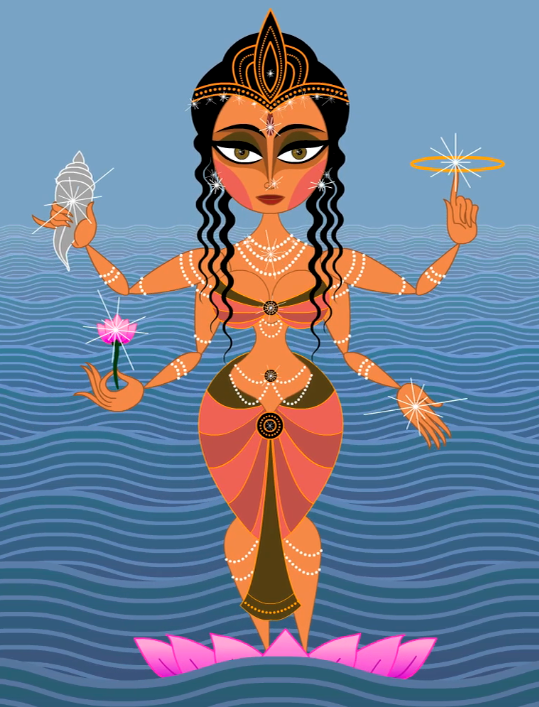
Saraswati represents intelligence, consciousness, cosmic knowledge, creativity, education, enlightenment, music, the arts, and power to Hindus.
— Wikipedia
Note: Originally, she looked like Saraswati to me; however, she could also considered to be Parvati, which makes the most sense; despite the usual trappings of the goddess of wisdom here (the shell is a giveaway), Parvati is “Parvati is considered as the supreme Divine Mother and all other goddesses are referred to as her incarnations or manifestations.”
And Parvati and Vishnu are lovers.
Appearances
Main credits
Ending
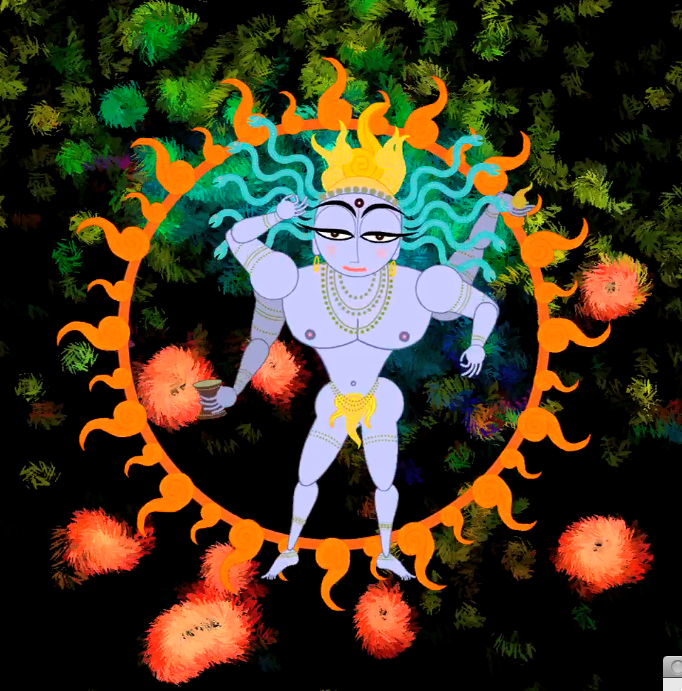
In some other Hindu denominations, Brahma, Vishnu, and Shiva represent the three primary aspects of the divine in Hinduism and are collectively known as the Trimurti. In this school of religious thought, Brahma is the creator, Vishnu is the maintainer or preserver, and Shiva is the destroyer or transformer.
— Wikipedia
[corrected from Kali]
Appearances
Attestment of Sita’s purity
“Mean to Me”
Agni Pariksha
“I’ve Got a Feeling I’m Falling”
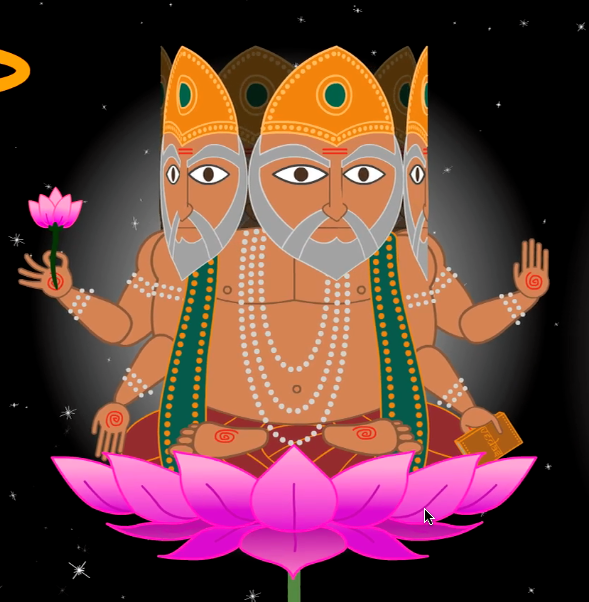
According to the Puranas, Brahma is self-born (without mother) in the lotus flower which grew from the navel of Vishnu at the beginning of the universe.
— Wikipedia
[corrected from Vishvakarma]
Appearances
Attestment of Sita’s purity
“Mean to Me”
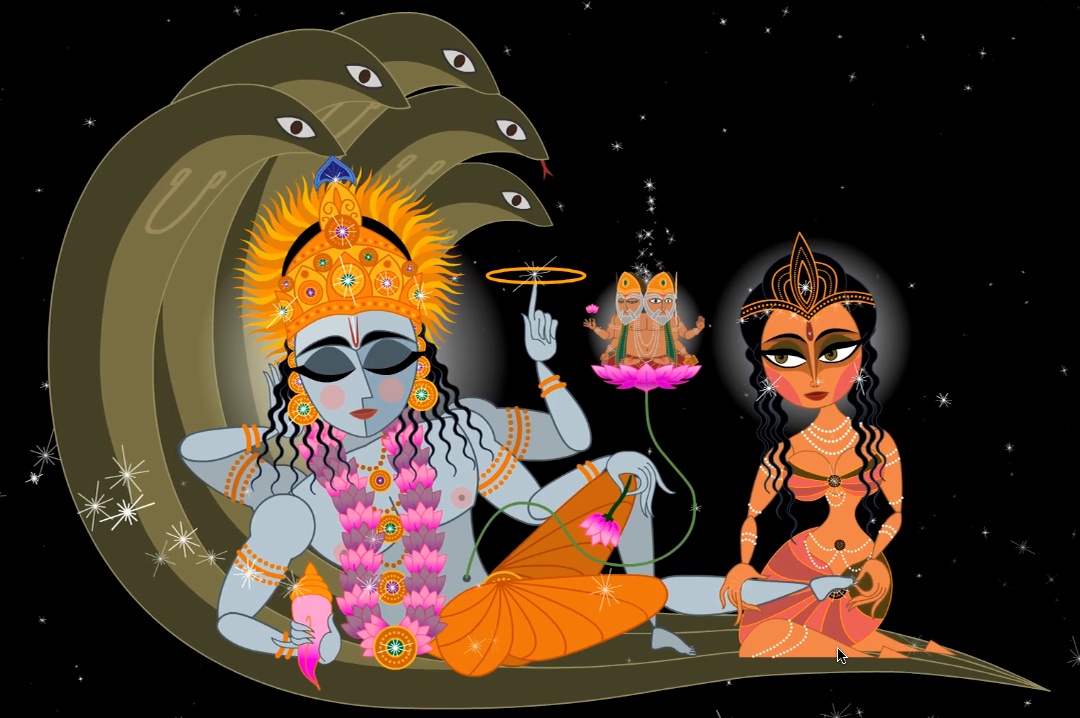
… Vishnu as the All-Pervading essence of all beings, the master of—and beyond—the past, present and future, the creator and destroyer of all existences, one who supports, sustains and governs the Universe and originates and develops all elements within.
— Wikipedia
The multi-headed snake he lounges upon is the serpent Kaliya, whom, in his aspect as Krishna, he subdued in the Bhagavata Purana.
Appearances
Ending
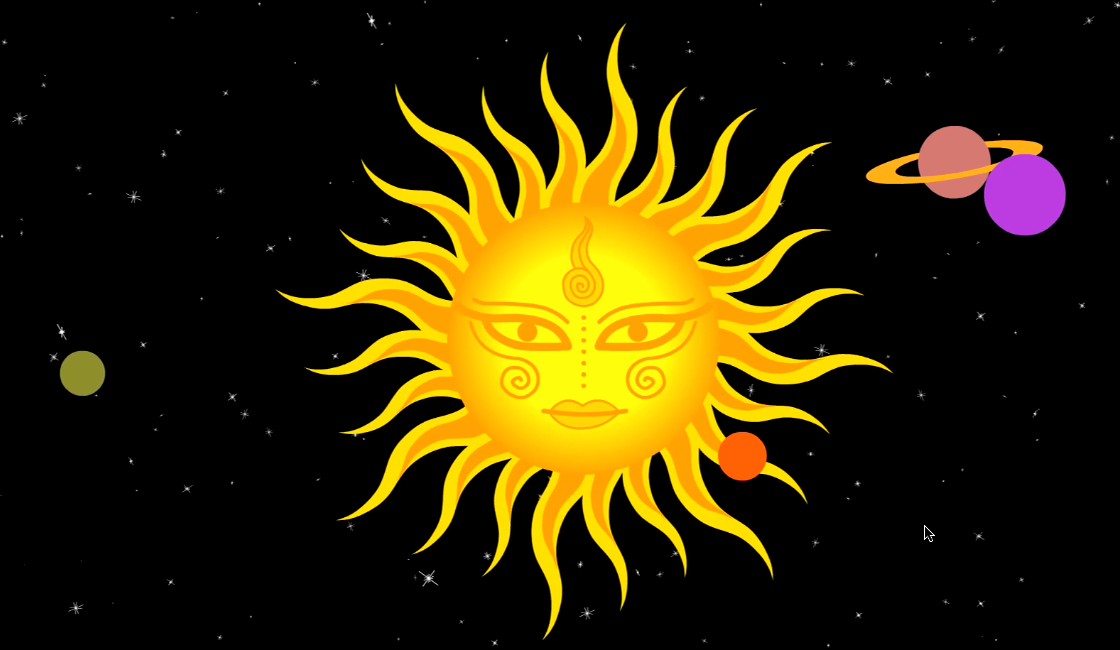

The term “Surya” also refers to the Sun, in general. God Surya has hair and arms of gold. Surya drives through the heaven in his triumphal chariot harnessed by seven horses or one horse with seven heads, which represent the seven colours of the rainbow or the seven chakras.
In Hindu religious literature, Surya is notably mentioned as the visible form of God that one can see every day.
— Wikipedia
Appearances
Technically every time it’s sunny
“If You Want the Rainbow, You Must Have the Rain.”
“Moanin’ Low”
“Am I Blue”
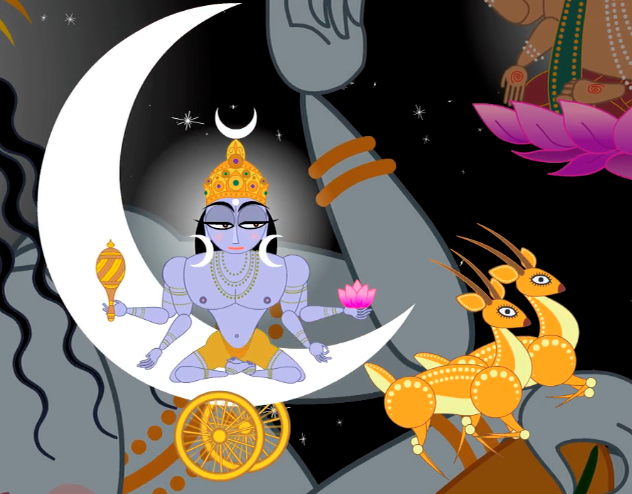
In Hinduism, Chandra (lit. “shining”) is a lunar deity and a Graha…. He is described as young, beautiful, fair; two-armed and having in his hands a club and a lotus. He rides his chariot (the moon) across the sky every night, pulled by ten white horses or an antelope.
— Wikipedia
Appearances
Ending

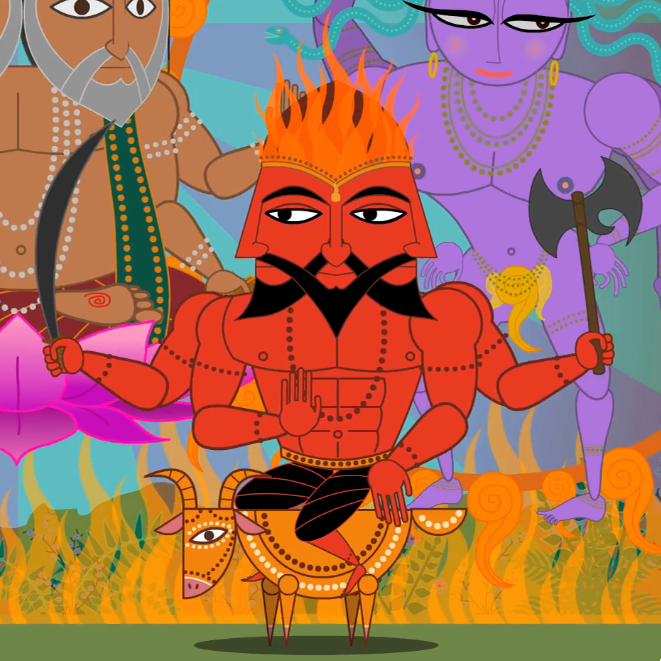
Agni is one of the most important of the Vedic gods. He is the god of fire and the acceptor of sacrifices. The sacrifices made to Agni go to the deities because Agni is a messenger from and to the other gods.
— Wikipedia
Appearances
“Mean to Me”
Intermission
Agni Pariksha
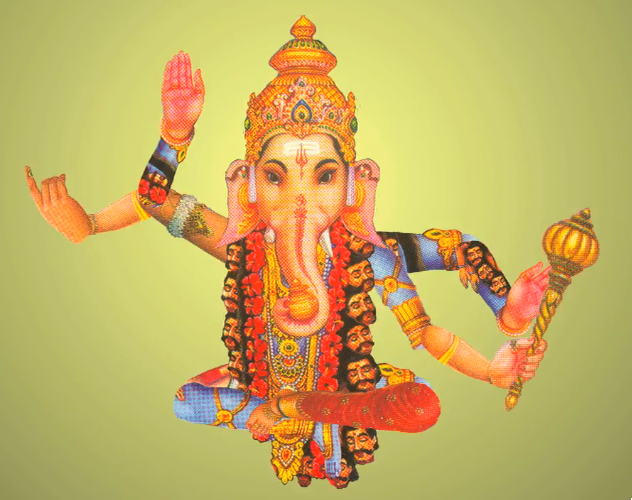
Although he is known by many other attributes, Ganesha’s elephant head makes him easy to identify. Ganesha is widely revered as the Remover of Obstacles and more generally as Lord of Beginnings and Lord of Obstacles (Vighnesha, Vighneshvara), patron of arts and sciences, and the deva of intellect and wisdom.
— Wikipedia
Appearances
 Spontaneous ∂erivation